
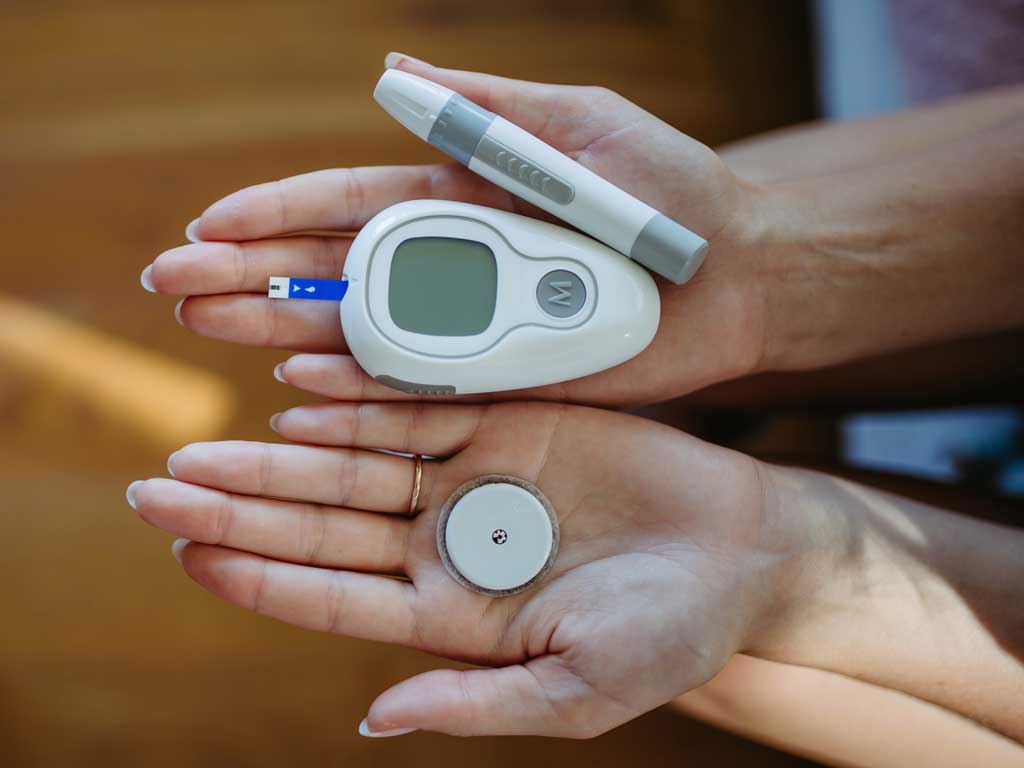
Knowing your numbers is sweeter than guessing. But more than that, knowing the impact of everything you put in mouth and the impact it has on your individual glucose levels has unlocked the opportunity and possibility of successfully managing and reversing the condition for my clients.
While glucose monitoring has been around for a long time, traditional methods of glucose monitoring, such as fingerstick testing, provide intermittent snapshots of blood sugar levels. Alternately, continuous blood glucose monitoring (CGM) systems offer real-time data and insights into glucose fluctuations, empowering individuals with type 2 diabetes to make informed decisions about their health and choose what is best for them. In this blog post, we’ll explore the benefits of CGM technology, focusing on two leading devices: Dexcom and FreeStyle Libre.
Understanding Continuous Blood Glucose Monitoring:
Continuous blood glucose monitoring involves the use of wearable sensors that measure glucose levels in the interstitial fluid beneath the skin. These sensors transmit data wirelessly to a receiver or smartphone, providing real-time glucose readings, trends, and alerts for hyperglycaemia (high blood sugar) or hypoglycaemia (low blood sugar).
CGM systems offer several advantages over traditional glucose monitoring methods, including:
- Real-time visibility: CGM provides continuous, real-time data on blood glucose levels, allowing individuals to monitor trends and respond promptly to fluctuations and have a better understanding of how their glucose levels change.
- Enhanced accuracy: CGM sensors offer more accurate and reliable glucose readings compared to fingerstick testing, particularly during periods of rapid glucose changes, such as after meals or during exercise.
- Insights into patterns: CGM data can reveal patterns in glucose levels, such as postprandial spikes or nocturnal hypoglycaemia, enabling individuals and healthcare providers to identify factors contributing to glycaemic variability.
Dexcom CGM System:
Dexcom is a leading manufacturer of CGM devices known for its accuracy, reliability, and user-friendly features. The Dexcom CGM system consists of a small sensor that is inserted beneath the skin, typically on the abdomen or upper arm, and a transmitter that wirelessly sends glucose data to a compatible receiver or smartphone app.
Key features of the Dexcom CGM system include:
- Continuous glucose monitoring: Dexcom provides real-time glucose readings every five minutes, allowing users to track their glucose levels throughout the day and night.
- Customizable alerts: Dexcom offers customizable alerts for high and low blood sugar levels, providing users with timely notifications to take corrective action.
- Share functionality: Dexcom CGM users can share their glucose data with family members or caregivers through the Dexcom Share feature, enhancing support and collaboration in diabetes management, meaning you’re not alone in your journey.
FreeStyle Libre CGM System:
FreeStyle Libre, developed by Abbott, is another popular CGM system that offers convenience and flexibility for individuals with type 2 diabetes. Unlike traditional CGM devices, FreeStyle Libre does not require fingerstick calibration and uses a small, disposable sensor worn on the back of the upper arm.
Key features of the FreeStyle Libre CGM system include:
- Flash glucose monitoring: FreeStyle Libre uses a “flash” glucose monitoring approach, where users scan the sensor with a handheld reader or smartphone to obtain glucose readings. This eliminates the need for routine fingerstick testing and provides on-demand access to glucose data.
- Trend arrows: FreeStyle Libre displays trend arrows alongside glucose readings, indicating the direction and rate of glucose change, helping users anticipate and manage fluctuations more effectively.
- Data analysis tools: FreeStyle Libre offers data analysis tools and reports that allow users to review glucose trends, time in range, and patterns over time, facilitating informed decision-making and adjustment of diabetes management strategies.
In conclusion, CGMs offer invaluable insights into blood glucose spikes, enabling proactive adjustments in diet, exercise, and medication to maintain stable blood glucose levels and minimize health risks in individuals with type 2 diabetes. While these devices can be expensive for long term regular use, I would recommend using these in conjunction with making informed diet, nutrition and lifestyle changes. This would help to measure the impact of the changes on your sugar levels and provide an opportunity to optimise and tweak the regimen based on your unique requirements.
Speak to your healthcare provider for more information.
* I do not promote or advocate for any specific brand to my clients, ensuring unbiased guidance tailored to their individual needs and preferences.
References:
Beck, R. W., Riddlesworth, T., Ruedy, K., Ahmann, A., Bergenstal, R., Haller, S., … & Kollman, C. (2017). Effect of continuous glucose monitoring on glycemic control in adults with type 1 diabetes using insulin injections: The DIAMOND randomized clinical trial. Jama, 317(4), 371-378.
Haak, T., Hanaire, H., Ajjan, R., Hermanns, N., Riveline, J. P., & Rayman, G. (2017). Flash glucose-sensing technology as a replacement for blood glucose monitoring for the management of insulin-treated type 2 diabetes: a multicenter, open-label randomized controlled trial. Diabetes therapy, 8(1), 55-73.
Klonoff, D. C., & Ahn, D. (2017). Continuous glucose monitoring: A review of the technology and clinical use. Diabetes research and clinical practice, 133, 178-192.